Frequently Asked Questions


The wind farm
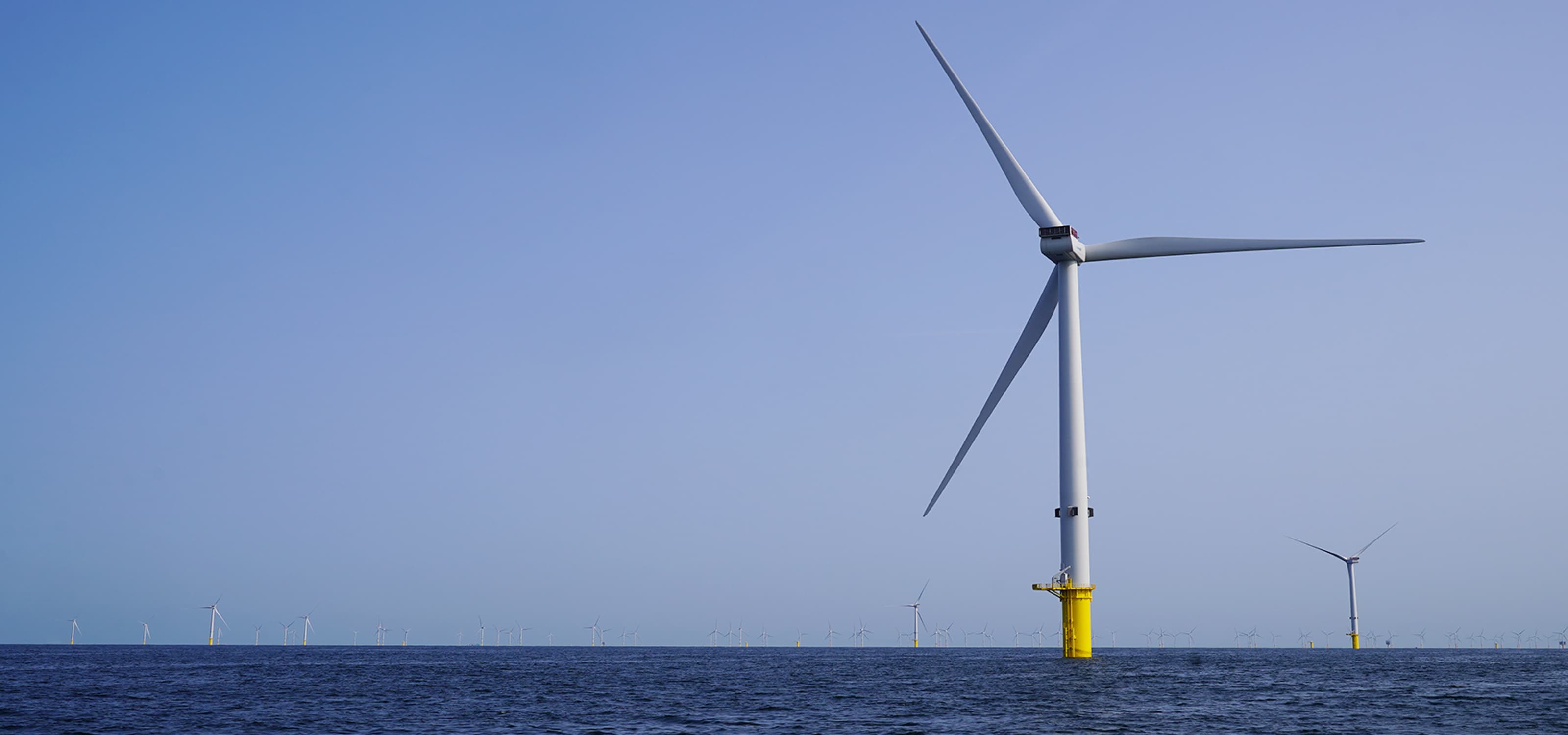
Hollandse Kust Noord is located at 18.5 kilometres off the west coast of the Netherlands at Egmond aan Zee.
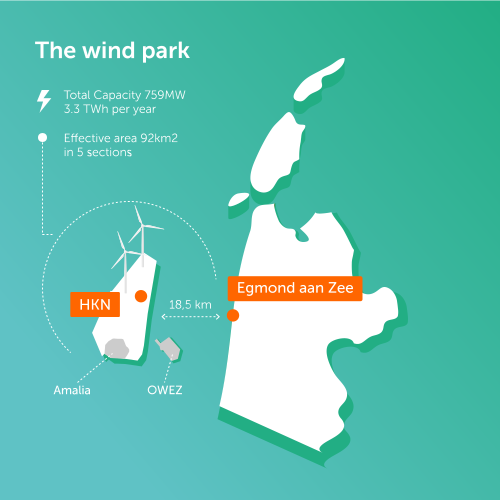
Hollandse Kust Noord is located 18.5 kilometres off the west coast of the Netherlands. The total surface area of the wind farm (including maintenance and safety zones) is 125 km². The installed capacity is 759 MW, generating at least 3.3 TWh per year. This equals enough renewable electricity for more than 1 million Dutch households.
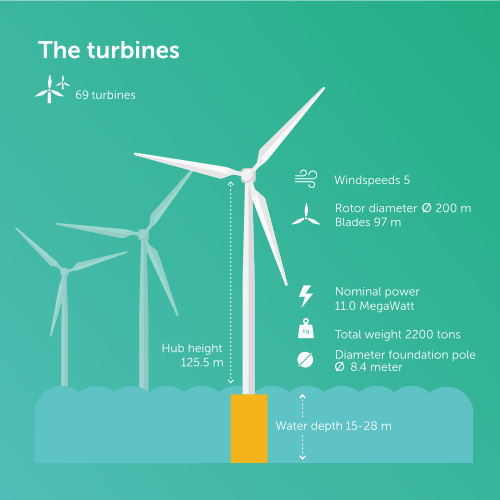
CrossWind installed 69 wind turbines, each with a capacity of 11 MW. Most of these wind turbines are more than 1 km apart.
The Dutch government determined that Hollandse Kust Noord should have a maximum of 100 wind turbines with a maximum tip height of 251 metres above sea level and a minimum capacity of 6MW. CrossWind has built larger, powerful wind turbines that resulted in 69 turbines that generates the same amount of power. This increased the efficiency of the wind park reduced costs and saved impact on nature.
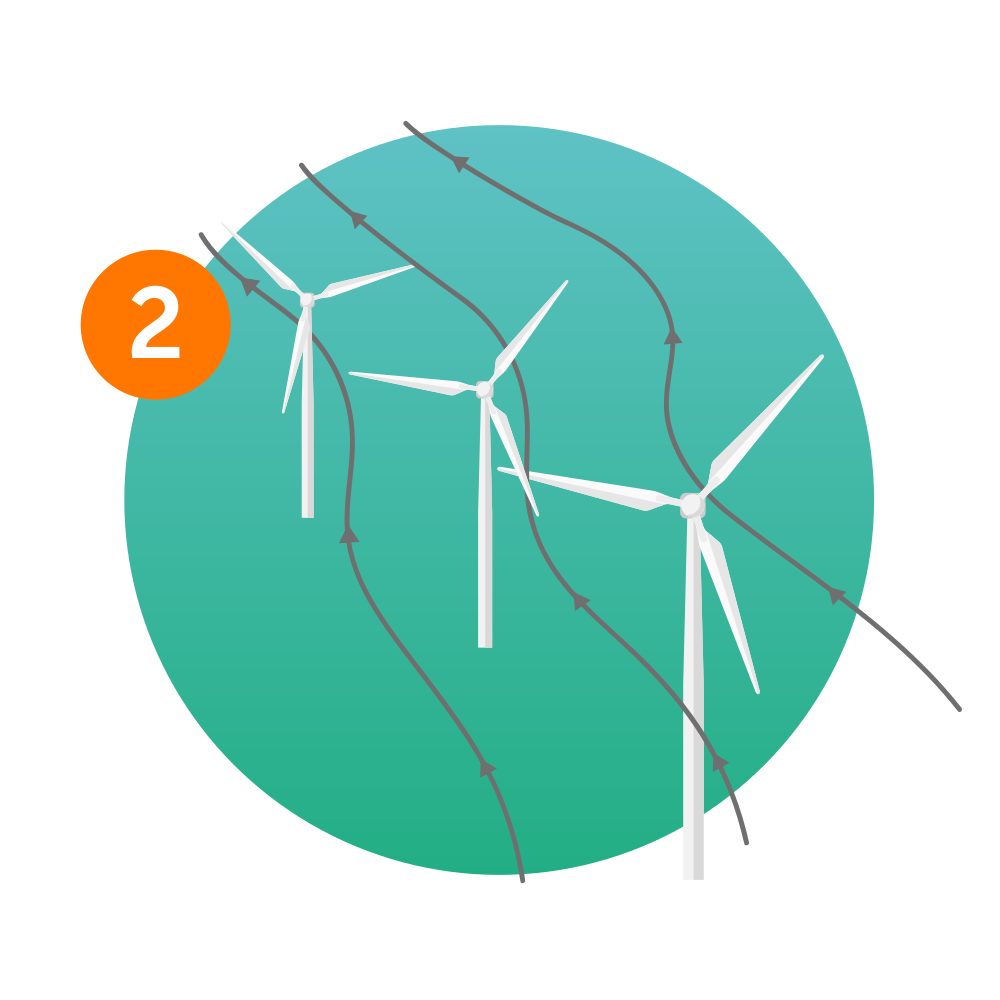
When a wind turbine extracts energy from the wind, it leaves a wake of lower wind speeds. This reduces the power of all other wind turbines. In other words: wind turbines capture each other's wind. This is known as the 'wake effect'. To a certain extent, we are already minimising this effect through the layout of the wind turbines in the wind farm.
An innovative solution is to control the wind turbines in a smart way by giving them a yaw error for certain wind directions. This slightly reduces the power of a single wind turbine, but a yawed rotor also pushes the wake away from the wind turbines that are downwind; this results in a higher total capacity. Together with TU Delft and its partners, looked at smart control technology based on real-time data to reduce the wake effect across the entire wind farm. This is one of the innovation projects that CrossWind did for this wind farm.
The wind turbines have a tip height of 225.5 metres and a rotor diameter of 200 metres. The blades of the wind turbines are 97 metres long. This tip height falls within the bandwidth from the environmental impact assessment; this states that the tip height may be between 189 and 251 metres.
The wind speed is not always the same everywhere. Nevertheless, the wind farm should preferably supply a constant, stable amount of green energy. This means that the wind turbines must be able to respond flexibly to circumstances. CrossWind's wind turbine supplier, Siemens Gamesa Renewable Energy (SGRE), is leading the way in adding flexibility at a scale in which every second counts. We ensured that the wind turbines become more self-regulating based on real-time data, in order to respond to changing circumstances within seconds. In this way, we will also help to keep the electricity grid stable in the future.
Technical questions about the wind farm
CrossWind and TNO experiment with offshore solar panels (0.5 MW) next to the wind turbines as part of the innovation projects in the wind farm agreed with the government. The solar panels help generate additional green power when the sun is shining, on top of the power produced by the wind turbines. They also provide electricity when there is not enough wind, resulting in a more constant energy production. In addition to increasing the capacity per square kilometre of the wind farm, this combination of technologies also increases the utilisation of the grid connection.
An offshore wind farm basically consists of five parts:
1. Sea cables that connect the wind turbines to each other and to TenneT's high-voltage grid. The Twentse Kabel Fabriek (TKF), based in Lochem, is supplying the sea cables for Hollandse Kust Noord.
2. The foundations of the wind turbines, which are anchored in the seabed. These foundations, also known as monopiles, consist of steel plates that have been rolled and welded together by Sif in Roermond and at the Maasvlakte in Rotterdam. In addition to the monopiles, other steel structures are also needed on the foundations to make them accessible for maintenance of the wind turbines. These constructions are made by Amicon in Sneek and Marketex in Estonia.
3. The grey-white towers that stand on the foundations and support the wind turbines are also made of welded steel plates. These towers are manufactured in Denmark by Welcon, a sub-supplier of Siemens Gamesa Renewables.
The nacelles are supplied by Siemens Gamesa Renewables. These nacelles are made of various materials that are brought from all over the world to Cuxhaven in Germany for assembly of the nacelle there.
4. The blades of the wind turbine are mainly made of fiberglass, balsa wood and epoxy, which as a whole is strong enough to transfer the wind forces to the nacelle. These blades are produced by Siemens Gamesa Renewables in Aalborg, Denmark.
Power supply
CrossWind installed a capacity of 759 MW. This equates to a production of at least 3.3 TWh per year. This annual energy production will fulfil some 2.8% of the electricity demand in the Netherlands and is equivalent to the energy consumption of approximately 1 million households.
Animals and Marine life
The wind farm will affect the habitat of birds, bats, fish and marine mammals. That is why we adhere to the HKN Permit requirements and the Wind Farm Site Decree. We applied measures for birds and bats to limit any adverse effects, such as shutting down the wind turbines under certain circumstances.
Permits and Experience
CrossWind needed various permits to build and operate the wind farm. Some examples:
- The most important one is the permit for the construction and operation of the wind farm. This permit was granted to CrossWind when we won the Hollandse Kust Noord tender.
- This construction and operating permit includes references to the regulations contained in the 'Kavelbesluit Hollandse Kust Noord' (Hollandse Kust Noord Wind Park Site Decree). These regulations are based on the specific area characteristics of the plot. The permit also states that CrossWind must comply with the general rules that apply to offshore wind parks. These are described in the 'Water Decree' ('Waterbesluit').
- In addition, CrossWind must comply with the working conditions and working hours legislation that apply on the North Sea. We must also meet the conditions set by the Ministry of Public Works and Water Management, State Supervision of Mines and the Coastguard; these conditions are documented in the plans that must be approved before the start of construction work.
CrossWind is a joint venture of Shell and Eneco. As two leading Dutch energy companies, we combined the experience, expertise and financial strength needed to develop Hollandse Kust Noord; a subsidy-free offshore wind farm and the first offshore wind farm with a range of innovations aimed at system integration.
Shared use
The wind energy area is open for the passage of small vessels and shared use.
The government - in close collaboration with CrossWind and various stakeholders such as fisheries and nature organisations - is investigating the possibility of shared use of the area between the wind turbines when operating. For example, the space between the wind turbines is very suitable for sustainable forms of fishing that do not disturb the sea bed (such as seaweed and oyster collection) and innovative forms of energy generation, such as floating solar panels. The government is proposing a special 'area passport' for Hollandse Kust Noord, which will include the most suitable forms of shared use for the area.